 Revolutionizing · Modernizing · Simplifying
Revolutionizing · Modernizing · Simplifying
Revolutionizing · Modernizing · Simplifying
Four empty office towers. $8 million total. A 39 percent office vacancy rate that is the worst among the top 50 cities in the country.
That is the setup. And somewhere in that math, a 38-year-old developer from Los Angeles saw not a ghost town, but a boomtown.
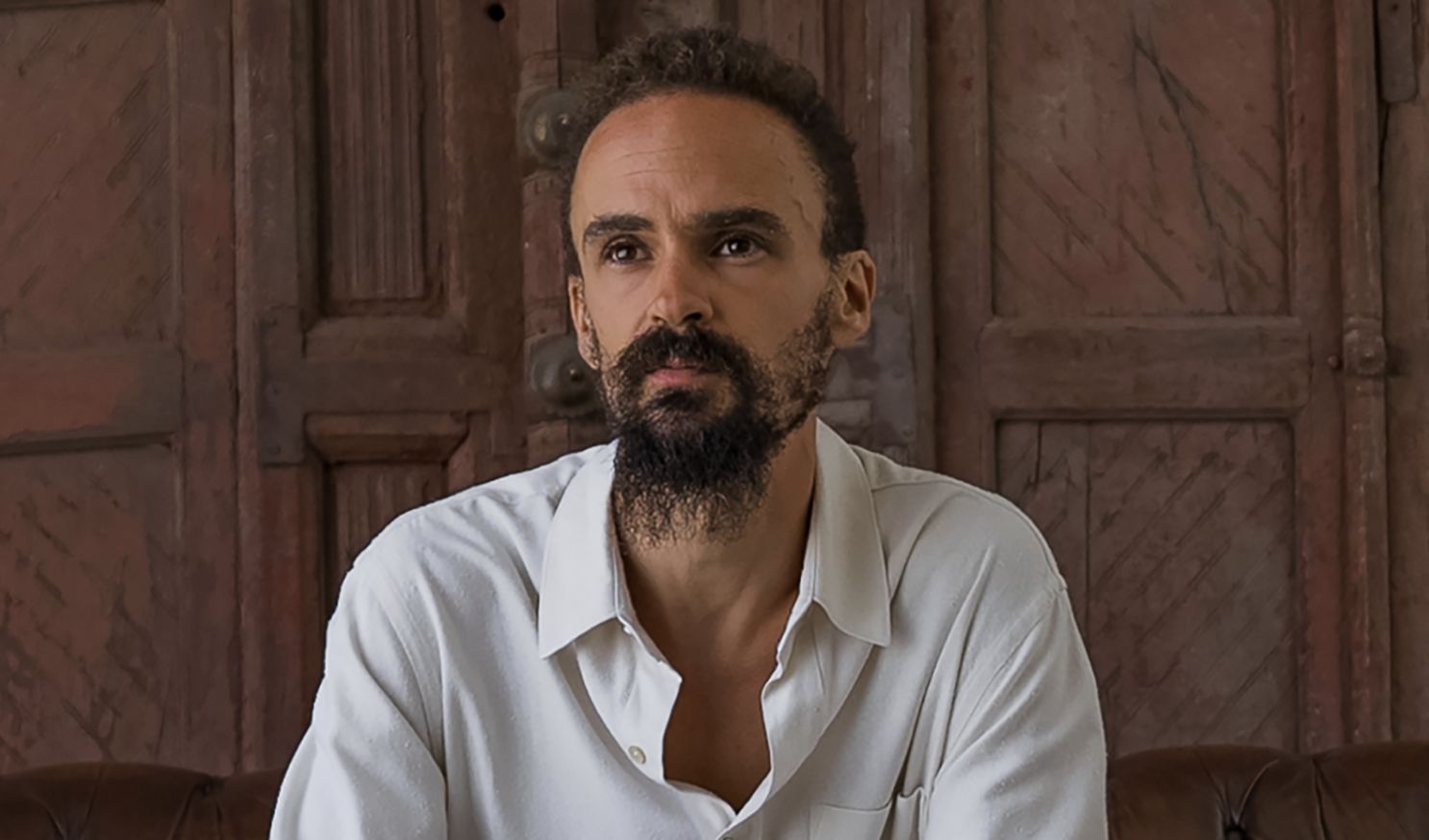
His name is Asher Luzzatto. And right now, he controls more of downtown Denver's office inventory than almost anyone else in the city.
Let's start with the number that should stop you cold. The Energy Center at 1625 and 1675 Broadway, two towers in the heart of downtown Denver, last sold in 2013 for
Before that, he grabbed 621 and 633 17th Street, two towers built in 1957 and 1974 respectively, for $3.2 million total. Blackstone valued those same buildings at
So four towers. 1.75 million square feet. Roughly 5.5 percent of all downtown office inventory, which is about the footprint of Empower Field. Eight million dollars.
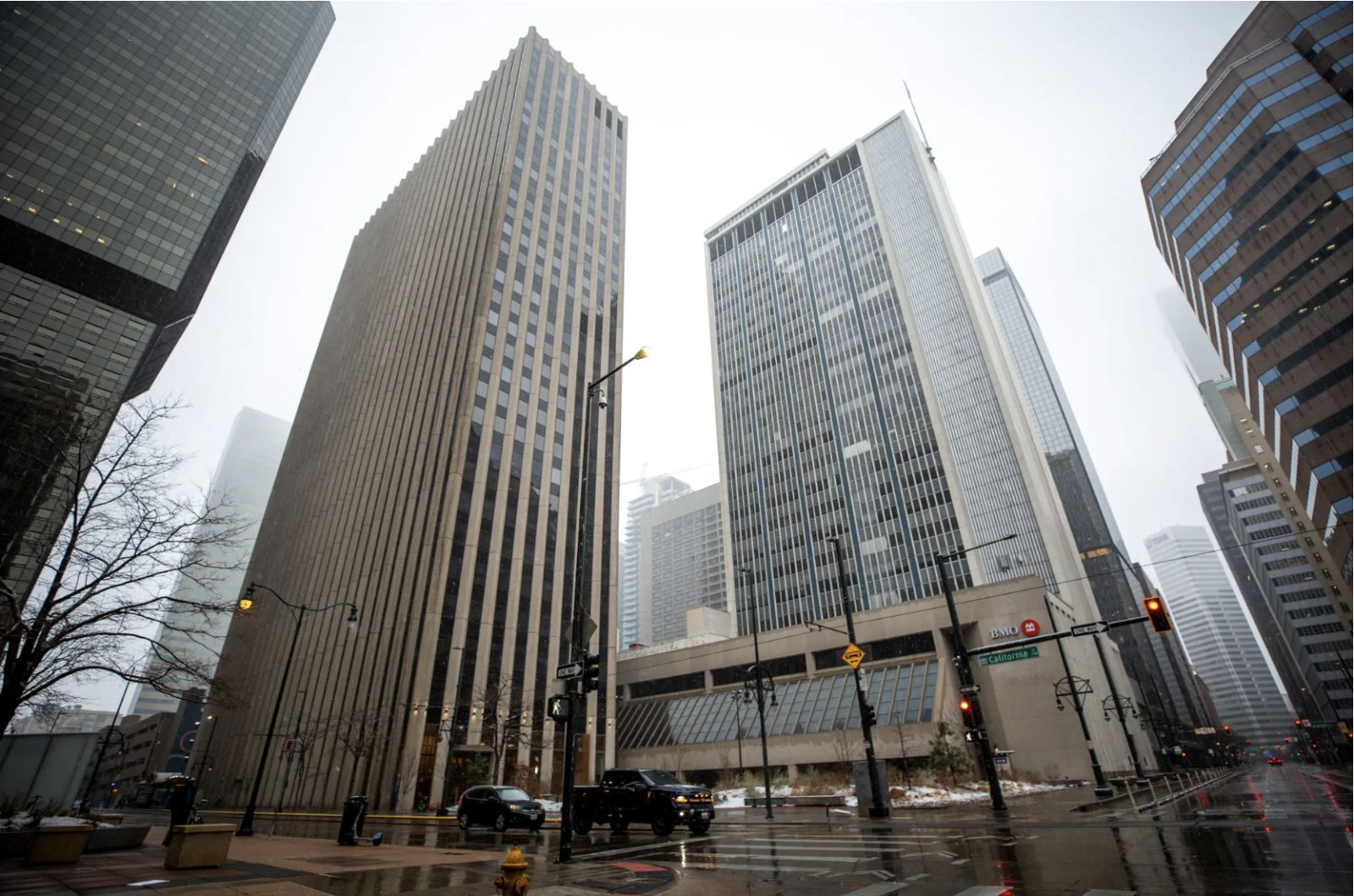
But the deal almost collapsed before it ever got going, and this is the part worth understanding. The ground underneath 633 17th Street does not belong to Luzzatto. It belongs to Rhoda Krasner, the octogenarian matriarch who also owns Lakeside Amusement Park. (Side note: yes, that Lakeside. Small world.) Krasner's position was that prior owners had undervalued the property in a 2015 assessment and she had been shorted on rent for a decade. Luzzatto had nothing to do with that. He was, as he puts it, carrying the "perceived wrongs" of owners who came before him.
Negotiations dragged for months. Krasner's side went dark for long stretches. There were serious conversations internally about just building at 621 and walking away from 633 entirely. Luzzatto called that "the easy way out."
The deal closed in the early morning hours of the last possible day before a filing deadline with the Denver Downtown Development Authority. "The last week was basically around the clock," Luzzatto says.
The Luzzatto family and the Krasner family are now bound together for 99 years under a new ground lease. Luzzatto is hoping to get the project moving considerably faster than that.
The plan for the 17th Street towers, now branded High Fidelity Plaza, is 712 apartments across the two buildings. But that is just the start of it. The vision also includes a children's museum, bodega, wine bar, cafe, bookstore, daycare center, art gallery, coworking space, and a rooftop pool.
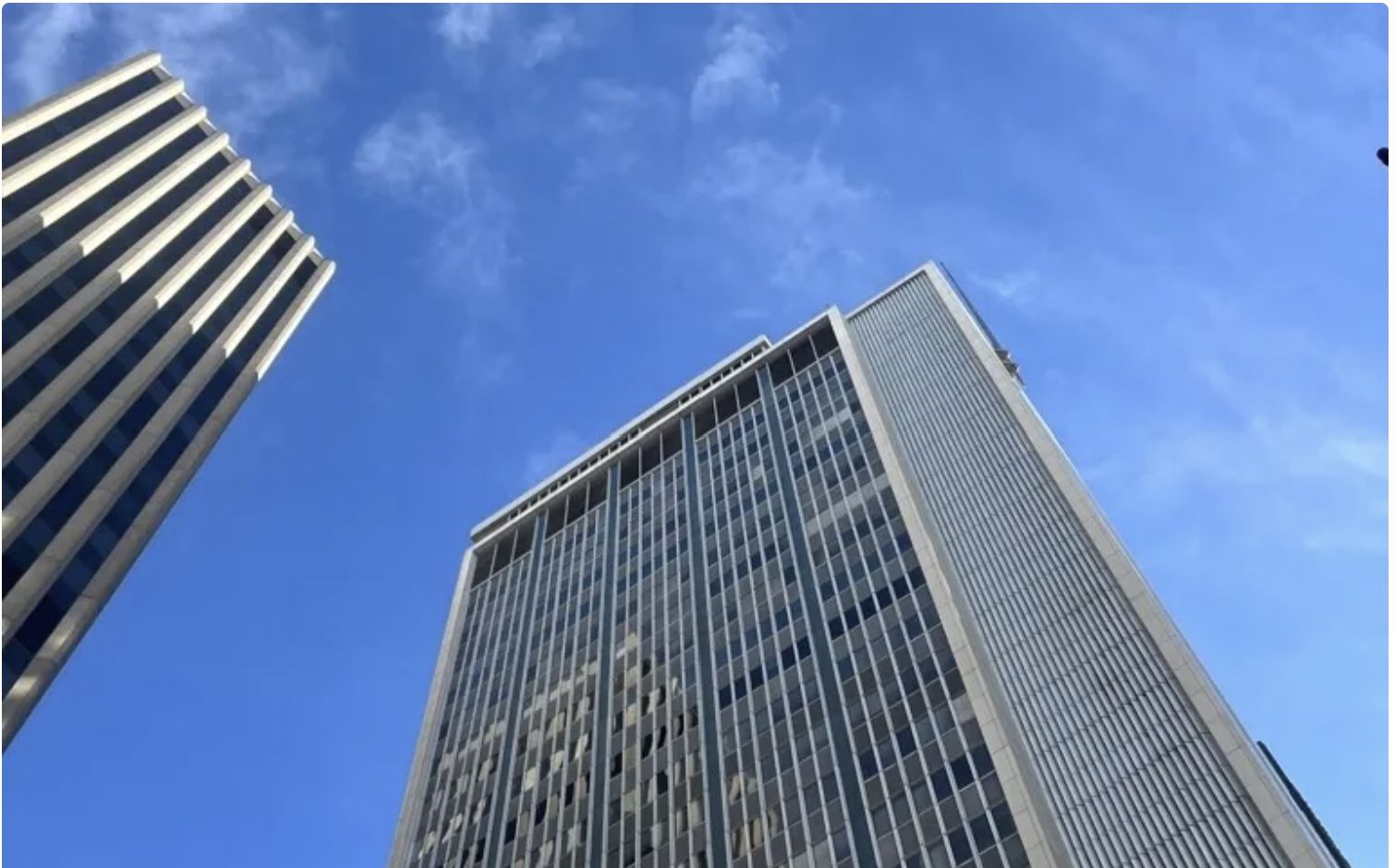
Luzzatto uses the phrase "vertical village" without apparent irony. Kids getting dropped at daycare downstairs. Jazz in the outdoor plaza on Sundays. A bookstore, a bodega, the pool on top. At least 70 of the units will be restricted to 60 percent of area median income. Rents are projected to run roughly
The total project cost is $315 million. He asked the Denver Downtown Development Authority for $63 million in gap financing. On March 25, the DDDA board voted unanimously to approve it. That is the largest loan the DDDA has ever approved.
Separately, he plans to add another 360 units at the Energy Center on Broadway. All in, you are looking at roughly 1,100 new apartments in a downtown that the city's own plan says needs 4,000 new units.
Nothing at this scale has been attempted in Denver before. Luzzatto will tell you it arguably has not been done anywhere outside New York. "Somebody's got to do it first," he says. "Somebody's got to do it in a market outside of New York, because every city in the country is facing the exact same issues with their downtown cores."
So who is Asher Luzzatto, exactly? His father, Marc Luzzatto, founded The Luzzatto Company in L.A. Asher grew up there, went to UCLA, then the University of Chicago Law School. While he was in law school he interned at the ACLU of Southern California working a case where the ACLU was suing the Veterans Administration for failing to house homeless veterans on its West L.A. property. The housing eventually got built. He calls that his "first insight into the desperate need for housing."
After law school he joined his father's firm, but also built out this whole parallel life. A 500-hour yoga training in Nepal. A Vipassana silent retreat. Years teaching meditation. He and his wife opened a wellness center called Hyperslow in the Fairfax district of L.A.
Then in November 2021 he announced he was running for mayor of Los Angeles. He dropped out by March 2022, citing his one-year-old daughter and a campaign where he felt like he was "yelling into a void." Karen Bass won. Luzzatto and his wife moved the family to Taos, New Mexico, where they now run a Hyperslow retreat center.
"The mayor campaign didn't work out, and that's okay," he says, "because then pretty soon thereafter, the opportunity came up in Denver."
He had been watching Denver for years. Sold on the outdoor culture, the music scene, the sunshine. What kept him out was price. Denver was one of the tightest markets in the country for a full decade. Then remote work gutted office demand, foreclosures piled up, and the office vacancy rate climbed to levels not seen since the oil bust of the 1980s.
"Denver was the first major market that really felt like the bottom had fallen out," Luzzatto says. "That was going to be my starting point."
He is careful to say he is not betting on distress. He is betting that distress opened a window to build affordably in a city with solid underlying demand. His argument to the DDDA board was direct: at High Fidelity, residents would pay the same rent they might pay in a four-story building by a highway, but with high-quality construction, a walkable environment, childcare, a bakery, and a bookstore.
Bill Mosher has been thinking about downtown Denver for four decades. He ran the Downtown Denver Partnership for nearly 20 years and oversaw the original transformation of Union Station. Late in 2024, Mayor Mike Johnston called and asked Mosher to become the city's chief projects officer, tasked with putting the DDDA's newly authorized $570 million in bond authority to work.
Mosher describes the current downtown as "a tale of two cities." Past Skyline Park, office occupancy is holding at or above average. But going the other direction into the core historic Central Business District, vacancy approaches 50 percent. The city's own analysis identified roughly seven million square feet of office space above the historic average vacancy rate, some of which may never be filled again. Some buildings, Mosher says, may eventually come down, though he notes that demolition currently costs more than acquisition.
The DDDA's strategy is to attract new office tenants where possible, convert viable buildings to residential, and transform what used to be a commuter-only business district into a genuine mixed-use neighborhood. If High Fidelity goes as planned, it eliminates more than a million square feet of that seven-million-square-foot overhang all by itself.
Mosher is honest about the unknowns. The DDDA's gap-financing model, lending at roughly 3 percent in a subordinate position behind a commercial bank loan, is itself untested at this scale. "We're trying to fit ourselves into a 20 to 30 percent range of gap financing," he says. "I would say that's a little bit of an experiment, too, because the private sector loans have to show up."
One thing Luzzatto's towers have going for them that most conversion candidates do not: underground parking. The High Fidelity buildings have garages. Most of the historic buildings the DDDA is evaluating have none at all. "That's the other thing we're watching," Mosher says, "how important parking is to the lease-up."
Conversion is not easy, and Luzzatto is not pretending otherwise. Older office buildings were not built for people to sleep in. Floor plates are large and deep, which means the core of the building gets almost no natural light. Plumbing systems need to be rebuilt at a scale the original engineers never imagined. Asbestos abatement and window replacement alone on two of the buildings is estimated at $30 million.
Luzzatto's guiding principle is what he calls a fifty-year standard. He has no patience for cheap construction. "This is concrete, steel and glass," he says. "I think people will be, frankly, very pleasantly surprised, given everything that's been built in the last few years."
He also has a practical argument for investors watching from the sidelines. Other lenders and developers need a data point. If one project demonstrably works at this scale in this market, the next developer can point to it. Right now that data point does not exist anywhere outside New York. Luzzatto is trying to become it.
On the last Saturday in February, hundreds of people took the elevator to the thirtieth floor of 633 17th Street for a party. Musician Julie Davis and Joseph Pope III, the bassist for Nathaniel Rateliff and the Night Sweats, who Luzzatto had met over a chance breakfast in Taos, hauled lamps, screens, paintings, and sound gear up to a gutted two-story office shell and turned it into a gallery full of live music and people.
Outside on the street, it was dead. As usual.
Inside, for one night, it looked like what Luzzatto is building toward.
"I really do believe it will have a profoundly positive impact on downtown," he says. "But I also recognize this project is not for everybody. This isn't a solution to the city's problems, but I hope it's a blueprint for additional solutions."
He thinks about development through the lens of stewardship, not ownership. The buildings will outlast him. He is just here to move them forward.
"I was not first to this party," he says. "I will not be last at this party. But I'm at the party."