 Revolutionizing · Modernizing · Simplifying
Revolutionizing · Modernizing · Simplifying
Revolutionizing · Modernizing · Simplifying
Picture a moonless sky and 90 meteors an hour streaking over the tallest sand dunes in North America. That is not a pitch. That is August 12th into the 13th, and it is free.
Here is the part people miss about the Perseids. Most years the moon shows up and washes half of them out. Not this time. The 2026 shower peaks the night between August 12 and 13, with the pre-dawn mornings of the 12th and 13th being your money window (that is straight from the Planetary Society and EarthSky). And the peak lands almost exactly on a new moon, August 12th at 17:37 UTC. No moonlight. Nothing bleaching out the faint ones. TravelPirates and EarthSky are both calling it the best moon conditions for the Perseids since 2018.
Do the math on that. Under truly dark skies with no moon, you are looking at 60 to 90-plus meteors per hour at the peak. That is a shooting star every minute or so if you are patient and your eyes adjust.
Now here is what makes this year different in Colorado specifically.
On Tuesday, June 2, 2026, Gov. Jared Polis and the Colorado Tourism Office (a division of OEDIT) rolled out the Colorado Stargazing Trail during Colorado Dark Sky Month. Basically the state took all of its certified dark-sky places and strung them together into one planning tool so you are not guessing where to go.
And Colorado has a lot to work with. We are talking 13 certified International Dark Sky Parks and eight International Dark Sky Communities. UCHealth puts the total at 21 certified Dark Sky Places, which is second in the entire country only to Utah. DarkSky Colorado counts 20 certified places as of January 2026, and here is the number that actually matters to you: nearly anyone in the state with a reliable car can reach one in about 90 minutes. That is a Wednesday night, not a vacation.
Colorado is not done either. More than 30 locations, including 12 state parks, have officially started the certification process. So the map only gets bigger.
Let me give you the real stops, because "go somewhere dark" is useless advice.
Great Sand Dunes National Park and Preserve, out near Mosca and Alamosa, has been certified since 2019 and sits under some of the darkest skies in the state. The tallest dunes in North America under a Perseid peak. That is a bucket-list night if you ask me.
Jackson Lake State Park is the one I keep telling people about. It is an oasis out on the plains and it was Colorado's first state park to earn International Dark Sky Park certification. They keep a public telescope on site, so you do not even need to own gear.
Black Canyon of the Gunnison is a certified Dark Sky Place that runs AstroFest events every September plus ranger astronomy programs through the summer. So you get the meteors in August and a reason to come back.
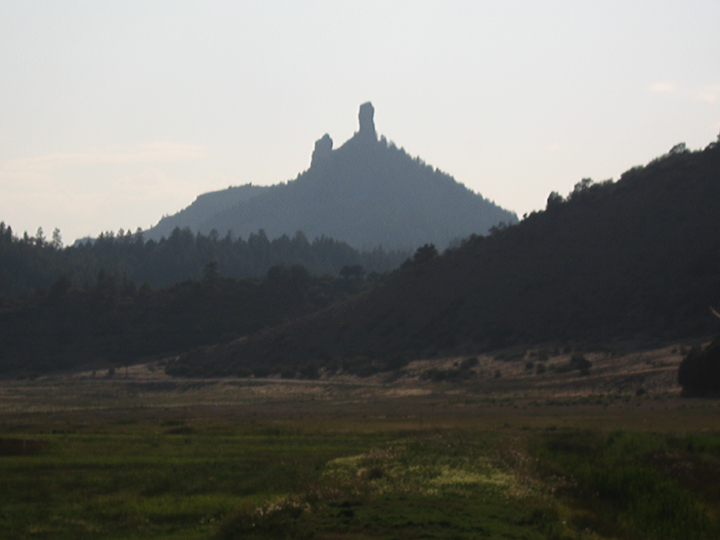
Want something with a little more theater? The Cumbres and Toltec Scenic Railroad runs a Dark Sky Train through the mountains of southern Colorado, and it is one of the trail's featured rides. Chimney Rock National Monument is another featured stop, where ancient celestial alignments line up with modern astronomy in a way that honestly gives me chills.
And then there is Ridgway, one of the highest-altitude International Dark Sky Communities in the entire world. Astronomers point people to Ridgway Athletic Park's fields for viewing, so you have got flat open ground and thin, clean mountain air working for you.
Look, I know not everybody is loading up the car for the San Luis Valley on a Tuesday. Hayley and I love the drive, but sometimes you just want to stay close.
South Platte Park has you covered. They are throwing a free Perseids Star Party at the Carson Nature Center, 3000 W. Carson Drive in Littleton, on Thursday, August 13, 2026, from 8 to 10 p.m. Campfire, s'mores, telescopes, the whole thing. Free. In the metro. You can be home and in bed by eleven.
Here is the thing about dark-sky certification that most people do not connect. It is not just a tourism sticker. Communities like Ridgway protect that darkness with lighting rules, and that protected night sky becomes part of what the place is worth. When a town commits to staying dark, it is making a long-term bet on being the kind of place people want to live and visit. Watch the towns starting that certification process right now. That is a signal.
Two rules. Get away from city light, which is the entire point of the trail. And give your eyes at least 20 to 30 minutes to adjust, then keep your phone in your pocket, because one glance at a bright screen resets you to zero.
The pre-dawn hours of August 12th and 13th are the peak. New moon. Dark skies second only to Utah. A meteor a minute if you are lucky. And a state that literally just built you the map.
Pick a spot. Bring a blanket. Buckle up.